South Korea's Solar Energy Market: Key Figures
South Korea's solar energy market continued to grow in 2025 and remains an important part of the country's energy transition in 2026. With increasing demand for renewable electricity and continued government support, solar PV is expected to play a major role in the country's energy development.
According to the International Renewable Energy Agency (IRENA), South Korea's cumulative installed solar PV capacity reached 34.04 GW in 2025, representing a 12.1% increase from 2024.
In 2026, the government continued to promote renewable energy development, with a target of reaching 100 GW of total renewable energy capacity by 2030, including 87 GW of solar PV.
Key figures include:
- 34.04 GW cumulative installed solar PV capacity in 2025.
- 12.1% annual growth in solar PV capacity in 2025.
- 87 GW solar PV capacity target by 2030.
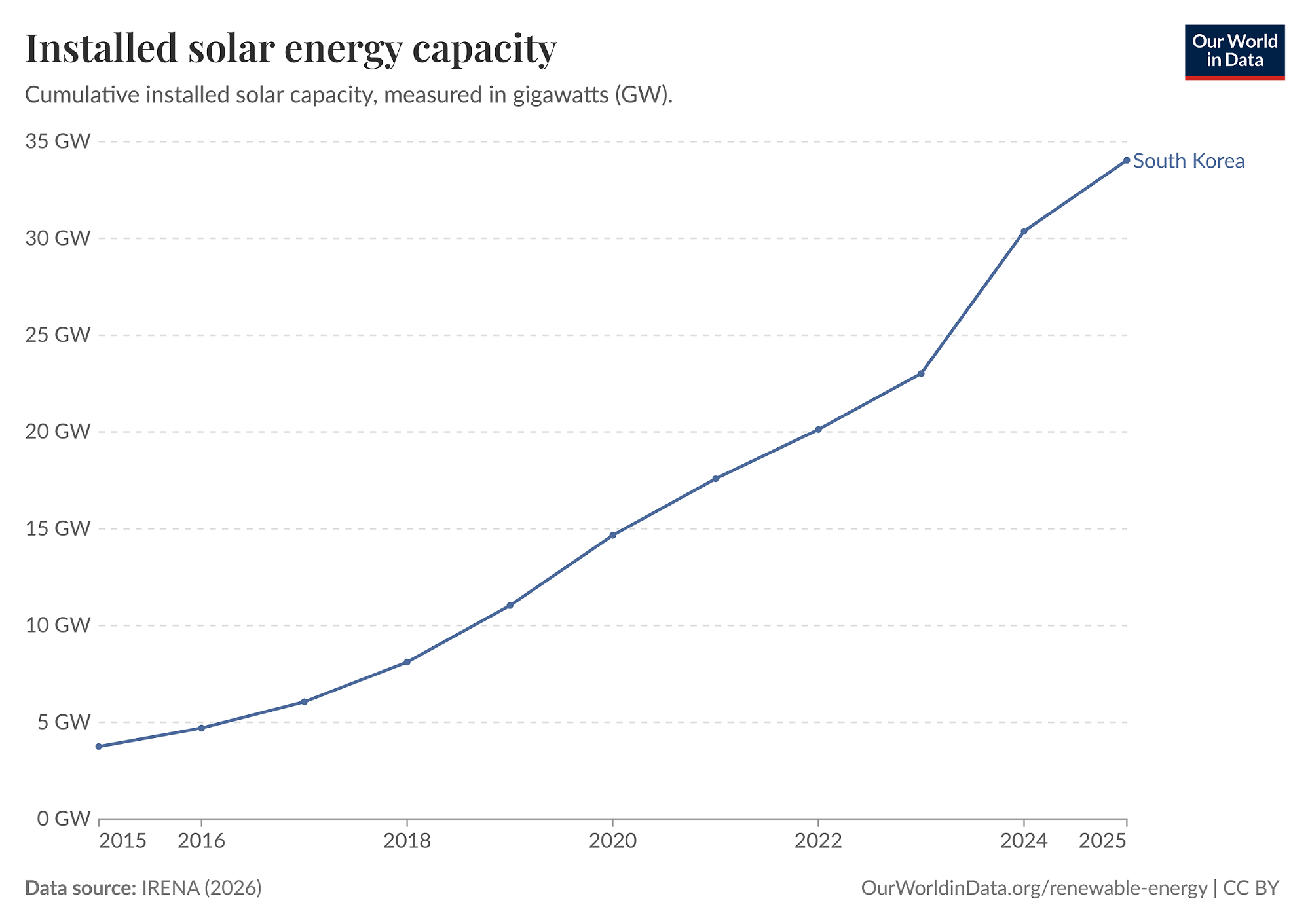
[South Korea's Cumulative Installed Solar PV Capacity, 2015–2025]
Source: IRENA (2026), via Our World in Data.
South Korea Solar Energy Market Overview
South Korea is accelerating its energy transition to reduce dependence on fossil fuels and support its carbon reduction goals. Solar PV is one of the main technologies supporting this development.
In 2026, the government continued to advance renewable energy policies and grid infrastructure. According to the Korea Development Institute (KDI), the country's total installed renewable energy capacity reached 39.1 GW in the first half of 2026.
However, the market still faces challenges, including limited land availability, grid connection capacity and project financing. These factors are encouraging the development of more diverse solar applications, particularly industrial and commercial rooftops, parking areas and agricultural land.
Key Trends in South Korea's Solar Energy Market
1. Government Support for Renewable Energy
South Korea's target of 100 GW of total renewable energy capacity by 2030 is creating opportunities for further solar investment. In 2026, the government continued to promote solar and wind power development while working to improve grid infrastructure and renewable energy integration.
These measures are expected to support new solar projects and create opportunities across the PV supply chain.
2. Growing Demand for Industrial and Commercial Rooftop Solar
With limited land available for large-scale solar projects, industrial buildings and commercial rooftops are becoming important locations for solar installations.
Factories, warehouses and other large buildings offer available roof space for PV systems without requiring additional land. This creates demand for mounting structures that can adapt to different roof materials and building conditions.
3. Development of Solar Carports and Agrivoltaics
Solar carports allow parking areas to generate electricity while providing shade for vehicles. They are suitable for industrial parks, commercial buildings and public parking facilities.
Agrivoltaic systems combine solar power generation with agricultural activities, allowing land to serve both purposes. These applications are creating demand for customized mounting structures and different installation designs.
4. Grid Connection and Project Development Challenges
Grid capacity, site conditions and project financing remain important factors affecting solar project development in South Korea. New installations require suitable locations and reliable access to the power grid.
For mounting system manufacturers, this also highlights the importance of adaptable structural designs that can meet different terrain and installation requirements.
Opportunities for Solar Mounting Systems in South Korea
The development of different PV applications creates opportunities for various solar mounting solutions.
Rooftop Solar Mounting Systems
Industrial and commercial rooftops require mounting structures that match different roof materials and building conditions. Lightweight aluminum and steel solutions can provide suitable options for different projects.
Ground-Mounted Solar Mounting Systems
Ground-mounted projects require suitable foundations and structural designs to adapt to different soil and terrain conditions. Steel mounting systems with pile foundations are among the available solutions.
Solar Carport Mounting Systems
Solar carports make better use of existing parking spaces. Structural stability, corrosion resistance, span requirements and waterproofing are important considerations in their design.
JinMega Solar: Mounting Solutions for Different PV Applications
As a solar mounting system manufacturer, JinMega provides structural solutions for rooftop, ground-mounted and solar carport projects, serving different site conditions and project requirements.
Rooftop Solar Mounting Systems
JinMega offers mounting solutions for different roof types, including metal roofs and flat roofs, with structural designs adapted to different installation conditions.
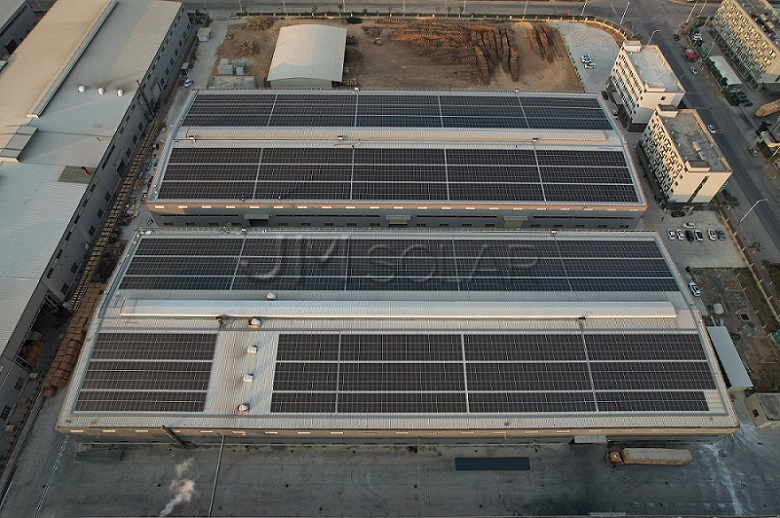
[Guangxi Guigang 4.9MW Rooftop Solar Project]
Ground-Mounted Solar Mounting Systems
JinMega provides aluminum and steel ground mounting systems, including pile-based structures and customized solutions for different terrain conditions.
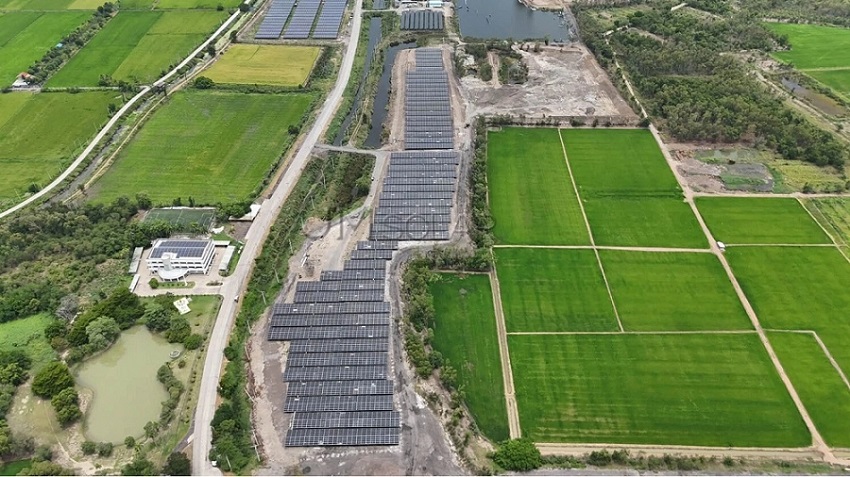
[Thailand 5MW Zn-Al-Mg Steel Ground Mounting Project]
Solar Carport Mounting Systems
JinMega's carport solutions include aluminum and steel structures designed for different parking layouts and project requirements.
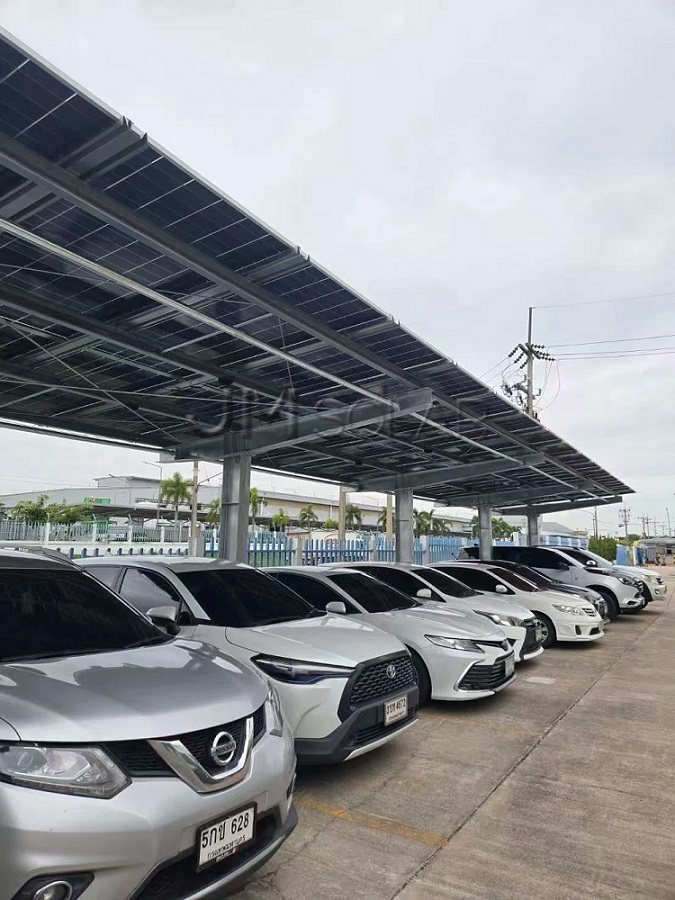
[Thailand 260kW Steel Solar Carport Project]
With experience in different solar applications and international markets, JinMega continues to provide practical mounting solutions for a wide range of PV projects.
South Korea's solar energy market continues to develop, supported by renewable energy targets and growing demand for clean electricity. Industrial rooftops, solar carports and agrivoltaic projects are creating new opportunities for solar PV installations.
As the market expands, adaptable and reliable mounting structures will remain important for different project types. JinMega provides Rooftop, Ground-mounted and Carport mounting solutions to meet diverse project requirements.

it is currently one of the largest exporters of photovoltaic products in China.
 IPv6 network supported
 English